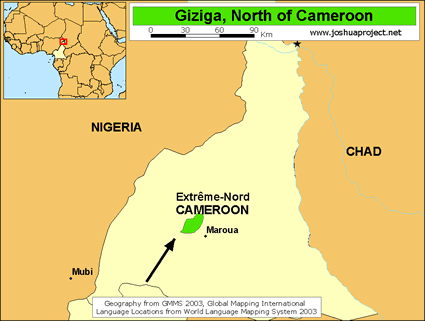
The North Giziga are among the Kirdi peoples inhabiting the mountainous regions of northern Cameroon. The term "Kirdi" refers to diverse ethnic groups who historically resisted Islamic conversion and maintained distinct cultural identities in the Far North. The North Giziga emerged as a distinct people through settlement in highland areas near Maroua. Oral tradition indicates they established organized chieftaincies centuries before Fulani arrival in the early nineteenth century. Their mountainous terrain provided protection and allowed them to maintain greater autonomy than lowland neighbors. Throughout German and French colonial periods, the North Giziga remained peripheral to colonial economic development, preserving traditional practices and social structures.
The North Giziga inhabit the Mandara Mountains and plateau regions with dramatic escarpments and hillside terraces. Villages cluster around natural water sources following ancient settlement patterns. Traditional housing consists of round mud-brick structures with thatched roofs connected by woven fences, though modern materials increasingly appear.
Agriculture forms the foundation of their economy. Farmers cultivate millet, sorghum, peanuts, and maize using terrace farming techniques. Pumpkins, beans, and melons supplement staple crops. Men engage in farming, herding, and crafts including leather working and basket making. Women contribute through food preparation, vegetable gardening, and clay craft production, retaining profits from garden sales. Children help with livestock and household tasks.
Millet and sorghum provide the dietary foundation, supplemented with vegetables, legumes, and occasional meat. Corn, peanuts, and beans appear regularly on family tables. Food is traditionally served communal style with family members eating from shared bowls with their hands. Hospitality toward guests remains central to social values.
Family structure is patrilineal and patriarchal, with male household heads making primary decisions. Polygamy coexists with monogamy depending on wealth and status. Extended family networks provide mutual support, with elderly members honored and cared for within households. Birth ceremonies, marriage exchanges, and elaborate funerals represent crucial community occasions that reaffirm social bonds and honor family relationships.
The North Giziga have historically practiced traditional African religions centered on ancestral veneration and spiritual intermediaries. Belief in a supreme creator remains fundamental, though religious practice focuses on ancestors who intercede for the living. Ritual specialists—medicine men and diviners—mediate between spiritual and physical worlds, providing healing remedies and interpreting spiritual concerns.
In recent decades, Christianity has expanded significantly among the North Giziga. Evangelical and Pentecostal churches have introduced spiritual frameworks appealing especially to younger individuals. These movements often address spiritual power and healing concerns that resonate with traditional worldviews. Traditional religious specialists continue to influence rural areas. The North Giziga demonstrate growing openness to the gospel.
Limited healthcare access severely constrains the North Giziga, particularly in remote mountain villages. Maternal mortality remains high, with inadequate medical facilities and trained workers. Malaria, parasitic infections, and respiratory illnesses claim preventable deaths. Clean water remains inaccessible in many settlements, contributing to waterborne disease.
Educational infrastructure remains severely underdeveloped. Rural primary schools lack adequate facilities, qualified teachers, and materials. Secondary education remains inaccessible for most families due to distance and cost. Girls face barriers through early marriage customs and economic pressures. Illiteracy limits economic opportunity and community development. Food insecurity affects families during lean seasons, and agricultural yields remain constrained without access to improved techniques.
Gospel understanding remains shallow, with nominal Christianity not translating into genuine faith commitment or biblical discipleship. Charismatic movements, while growing, sometimes emphasize spiritual power over careful biblical grounding. Contextualized gospel witness addressing spiritual concerns while grounding faith in Scripture remains essential.
As evangelical movements flourish, prayer is needed that their deepening Christian commitment will transform into missional passion to evangelize unreached neighboring peoples throughout the Far North region.
Pray that God would establish churches among the North Giziga that clearly proclaim Jesus Christ as Savior and Lord, disciple believers in biblical truth, and mobilize them to evangelize unreached neighbors throughout Africa.
Pray that the Lord would raise up North Giziga evangelists, church planters, and Christian leaders equipped to reach their own people and neighboring ethnic groups with Christ's transforming gospel.
Pray for improved access to quality healthcare, clean water, nutritious food, and educational opportunity for North Giziga children and families, especially in remote mountain villages.
Pray that Christian workers and development organizations would serve the North Giziga with excellence and genuine love, demonstrating that Jesus Christ cares for their total flourishing and wholeness.
Scripture Prayers for the Giziga, North in Cameroon.
https://www.101lasttribes.com/tribes/gisiga.html
https://www.britannica.com/place/Cameroon/Cultural-life
https://www.everyculture.com/Bo-Co/Cameroon.html
https://en.wikipedia.org/wiki/Kirdi
| Profile Source: Joshua Project |